
Is Japan the next big winner for school enrichment trips?

For years, New York has been a natural choice for schools seeking an enrichment trip that rewards their students both academically and personally. Big, exciting and packed with things to see and do, while still being relatively easy for a group of students to navigate, it's a city that balances that once-in-a-lifetime "wow" factor with easy management for party leaders.
There is another destination that offers all of this – Japan – but many teachers overlook how straightforward trips to this unusual place might be.
At first glance, Japan may feel like a daunting prospect. It's further away, the language is unfamiliar and its culture can look a world apart from the UK. Yet once you arrive, it quickly becomes clear that this gem in the Far East is remarkably well suited to school travel. As with New York, there's plenty to explore, an efficient transport network, and an endless supply of experiences that students are unlikely to encounter anywhere else.
And while Japan can feel completely different to life in the UK, there are also some surprising points of familiarity. Like the UK, Japan too is an island nation, and its cities have a strong sense of identity and routine. Add in affordable food, safe and straightforward public transport and three very different cities within easy reach of one another, and Japan starts to look less like an ambitious leap and more like the next great school-trip destination.

A culture that feels completely different
One of the biggest draws of visiting Japan is, quite simply, the chance to experience somewhere that's genuinely unlike home.
Japan's culture has developed over centuries with relatively little Western influence, and that difference is apparent in everyday life. From Shinto shrines and Buddhist temples to sumo, geisha, tea ceremonies and traditional crafts, students can encounter customs that have no real equivalent at home. At the same time, Japan is one of the world's leading technology and manufacturing centres, with neon-lit shopping districts, high-speed rail and futuristic architecture all holding excellent educational value for young people who visit.
Easier logistics than you think
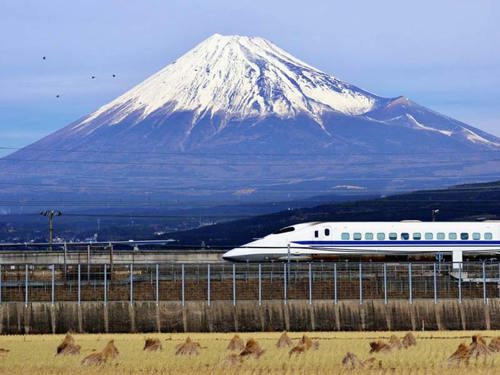
Japan's size and distance from the UK may make it seem difficult to navigate, but travelling around its main cities is surprisingly straightforward, thanks to the famous shinkansen. These bullet trains can take you from one end of the country to the other in a matter of hours, and feature comfortable seats as well as the chance to enjoy ekiben (train station bento) during your journey.
Within each city, public transport systems are also reliable and efficient, with trains rarely leaving even a minute late. The Tokyo Metro also took its early inspiration from the London Underground, so there are more than a few similarities here! Hiroshima is easily walkable, but has a tram network for covering further distances, while Kyoto's network is a little less intuitive – buses playing a larger role – but still easy to navigate.
As one of the most densely populated cities in the world, walking around Tokyo can sound intimidating. But due to exemplary organisation and etiquette among its residents, things rarely feel chaotic. There are crowds, of course, but a little awareness of surroundings, following local conventions, and keeping to the right side of the pavement make them remarkably manageable.
Unique experiences everywhere
Whether it’s the scale of one of the world’s biggest cities, a tranquil experience in the old imperial capital, or paying homage to those who perished in one of the biggest tragedies in history, a school trip to Japan can cover a remarkable amount across multiple subjects in a short space of time.
In the capital, examples of architectural design are everywhere: groups can climb up Tokyo Tower or Tokyo Skytree for a bird's-eye view of the city’s vast urban landscape, and visit Sensoji Temple and its surrounding neighbourhood of Asakusa offer a glimpse of the city's older traditions. To the west of the city, Shinjuku, Harajuku and Shibuya will be adored by students for their youth culture and neon signs, and for the spectacle of viewing thousands walk the largest pedestrian crossing in the world: Shibuya Crossing.
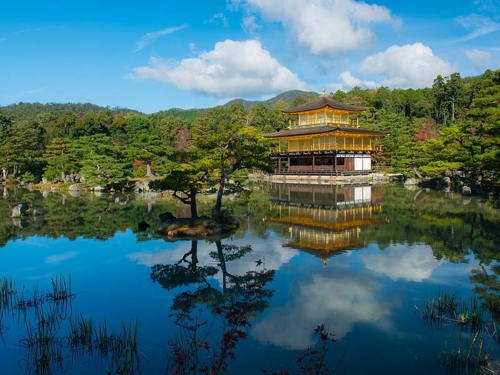
Formerly Japan's imperial capital, Kyoto is home to some of Japan’s most important temples, shrines and gardens for soaking up the country’s history and culture, with particular highlights including the famous red torii gates of Fushimi Inari, the gold pavilion at Kinkakuji, and the Zen rock garden at Ryoanji. If you can get your group to wake up early and wander the historic streets of Gion in the early morning, they may even spot a geisha! A half-day trip to nearby Nara adds another peaceful excursion, with Todaiji Temple and its enormous bronze Buddha, as well as the city's famously free-roaming deer.
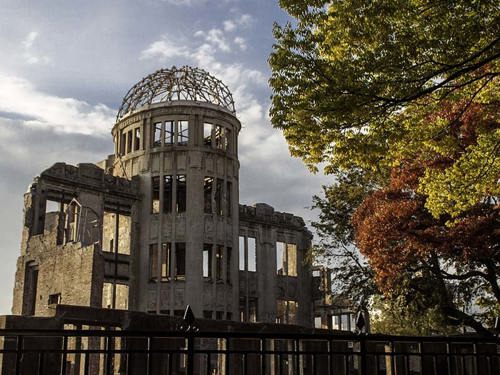
Further west, Hiroshima offers a more reflective experience. The Peace Memorial Park and Atomic Bomb Dome provide an opportunity to learn about one of the defining events of the 20th century and to consider its consequences – both then and today.
And then, the konbini
One of the unexpected pleasures of taking students to Japan is how easy it is to eat well without spending a fortune.
Japan's convenience stores, or konbini, can be found on almost every street corner, the main brands being 7-11, Lawson, and Family Mart. Clean and inexpensive, with a huge variety, they’re far removed from the limited, expensive selection offered by your local Tesco Express! Here, students can pick up rice balls, sushi, sandwiches, snacks, drinks, and even hot food for a relatively small amount, making them an easy option for lunches when you're out exploring.
Eating out can also be surprisingly affordable, particularly compared with major Western cities. For a group used to the prices of London or New York, a £5-a-bowl ramen spot can be a pleasant surprise once the initial cost of getting there has been covered.
So, is Japan the next big destination for enrichment?
Japan may still feel like an ambitious choice for a school trip, but then that's part of its appeal. For students, the distance from home translates into a destination that feels genuinely different from home, where there's a lot to learn – whether it's about trying new foods and confidence navigating public transport to familiarising with themselves the local customs, architecture and quirks of everyday life.
Yet it is also a country that is surprisingly straightforward logistically. The cities are safe and well organised, the transport network is efficient and there is plenty to see and do without constantly moving from one attraction to the next – all things we know appeal to party leaders, too.
For schools looking to broaden their enrichment programmes beyond the usual, Japan offers an unusually strong combination of accessibility and cultural depth. It's a long way from home, that may be true. But that may be exactly what makes it such a worthwhile – and unforgettable – visit.
To find out more about school trips to Japan, or enquire about booking a school trip, please call us on 01273 025756. You can also fill out our webform, and our school trip experts will get back to you as soon as we can.


