
Why memorials are an essential part of history school trips

Equity Sales Executive Toby Duncan studied an Associate's Degree in War & Conflict at the University of Brighton. Below, he explores the value of memorials for supporting students' understanding of historical topics in school trip itineraries.
Monuments play a significant role in shaping how societies remember, interpret and understand historical events. Beyond their physical presence, these structures provides a space in which history can be remembered, questioned and interpreted, while reflecting the political, cultural and social values of the societies that create them.
However, representing historical atrocities can present many challenges, particularly when commemorating events characterised by extensive human suffering. Peter Eisenman's Memorial to the Murdered Jews of Europe in Berlin, for example, demonstrates how monuments can challenge conventional methods of remembrance. Through repetitive structures, disorientating design and deliberate ambiguity, the memorial encourages individuals to confront the complexities of the Holocaust without offering a definitive interpretation.
For history students studying war and conflict, memorials like this offer a particularly valuable connection between historical evidence and the societies that remember it. They provide opportunities to consider not only what happened, but how historical events continue to shape collective identity, responsibility and understanding.
When planning a history school trip, it's understandable that museums often form the centrepiece of an itinerary. Their exhibitions, artefacts, archival material and expert interpretation provide students with essential historical knowledge. Yet, the best learning does not always occur where the most information is presented. Having the opportunity to reflect upon that knowledge, consider its significance and develop individual interpretations is equally important. This is where memorials offer something distinct.
The value of reflection
Across many history trips, museum visits are often at the top of our party leaders' lists for must-have excursions. Here, it's expected that students encounter historical evidence, follow chronological narratives and develop their understanding of the events being studied. However, memorials are just as key. They provide a unique learning environment where students are not necessarily being presented with another explanation of history. Instead, they bring an opportunity to pause.
This can be particularly valuable for secondary-age students, who are developing the ability to evaluate historical evidence, question established interpretations is history and form their own conclusions. Reflective practice encourages students to move beyond simply recalling information towards considering its wider significance – deepening their overall understanding.
A memorial can prompt questions that might not arise within a conventional classroom or museum exhibition. What does it mean to commemorate those who died? Whose experiences are remembered? How should societies acknowledge atrocities committed in their name? What responsibilities do subsequent generations have towards the past?
These questions do not necessarily have straightforward answers. Indeed, their value often lies in encouraging students to consider different perspectives rather than arriving at a single prescribed conclusion.

Berlin: Eisenman's Memorial to the Murdered Jews of Europe
Opened in Berlin in 2005, Peter Eisenman's Memorial to the Murdered Jews of Europe demonstrates how architecture can encourage this kind of reflection.
Situated near the Reichstag and Brandenburg Gate, the memorial consists of 2,711 concrete slabs arranged across an uneven landscape. Its central location places remembrance within the political heart of modern Germany, reinforcing the importance of confronting national historical responsibility.
Unlike traditional monuments featuring statues, inscriptions or recognisable symbolism, Eisenman creates an abstract environment that encourages individual interpretation among students. Visitors move between increasingly tall concrete slabs along uneven pathways, experiencing a landscape that can feel confusing, isolating and disorientating.
From outside, the memorial appears orderly and uniform. However, moving through it disrupts this impression, creating an experience that is difficult to predict or navigate – something that intentionally mirrors the disturbing relationship between bureaucratic organisation and the irrational brutality of the Holocaust.
The Nazi regime utilised administrative institutions, transport systems and ordinary bureaucratic procedures to facilitate the systematic persecution and murder of European Jews. Eisenman's uniform structures consequently invite reflection on how seemingly rational systems can become instruments of extraordinary violence.
For students who have already studied the Holocaust, the memorial offers an opportunity to consider these themes without being directed towards a particular interpretation. Its ambiguity encourages visitors to question what they have learnt, consider the limitations of historical understanding and confront the difficulty of representing genocide.
Normandy: remembering the human cost of conflict
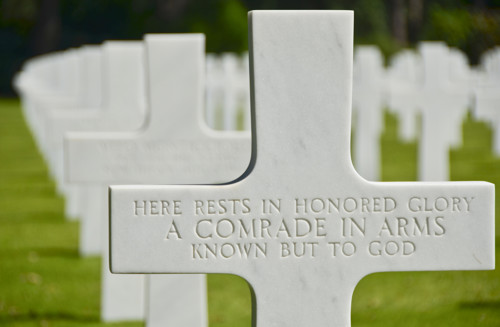
The memorials and cemeteries of Normandy offer a different, but equally valuable, opportunity for reflective learning. Having explored the military operations, strategic decisions and experiences of the Normandy landings through museums and battlefield tours, students can encounter the human consequences of these events at sites such as the Colleville-sur-Mer American Cemetery.
Overlooking Omaha Beach, rows of white crosses and Stars of David extend across the American Cemetery. The scale and uniformity of the graves offer a striking visual contrast to the beaches and battlefields students may have visited earlier in their itinerary.
These sites encourage a different kind of historical engagement. Rather than focusing on military strategy, the movement of troops or the outcome of an operation, students are confronted with its human cost.
The experience can prompt reflection on sacrifice, the consequences of conflict and the individual lives represented by historical statistics. It also raises questions about how different nations commemorate their dead and the relationship between remembrance, national identity and historical responsibility.
Such experiences are particularly meaningful when students already understand the historical context. A visit to a cemetery following a battlefield tour or museum excursion allows them to connect the military events they have studied with the individuals who experienced them.
Ypres and the Somme: remembrance beyond the battlefield
The First World War memorials of Belgium and northern France provide further opportunities to explore the relationship between remembrance and historical understanding.
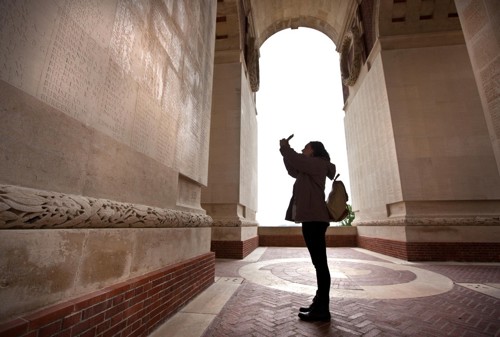
At the Menin Gate in Ypres, the names of tens of thousands of Commonwealth soldiers who have no known grave are inscribed across its walls. Its Last Post ceremony, held beneath the memorial each evening, offers an opportunity to consider how remembrance continues long after a conflict has ended.
For students who have explored the trenches, battlefield landscapes and museums of the Ypres Salient, the memorial provides a different perspective on the scale and consequences of the First World War. Its inscriptions transform the abstract concept of the missing into a collective record of individual lives.
Similarly, the Thiepval Memorial to the Missing of the Somme commemorates more than 72,000 British and South African servicemen who died in the Somme sector before 20 March 1918 and have no known grave. Its monumental scale reflects the enormity of the losses suffered during the conflict.
These memorials also demonstrate that commemoration is not static. Ceremonies, inscriptions and the continued presence of visitors ensure that remembrance remains an active part of contemporary society.
For students, this provides an opportunity to consider not only the history of the First World War, but also how its legacy has been maintained and interpreted across generations.
An essential part of a wider learning experience
Ultimately, memorials such as those outlined above demonstrate how monuments can shape collective memory while challenging conventional historical narratives; after all, learning about history involves more than studying facts or remembering events.
On a well-balanced school trip, students benefit the most from an itinerary that integrates both the knowledge necessary to understand the past and the opportunity to think independently about its meaning. Memorials help bridge that gap, encouraging students to become not simply informed observers of history, but thoughtful and reflective interpreters of it.
To book a history school trip with Equity, get in touch with our team on 01273 648248. You can also fill out our webform, and our school ski experts will get back to you as soon as we can.


